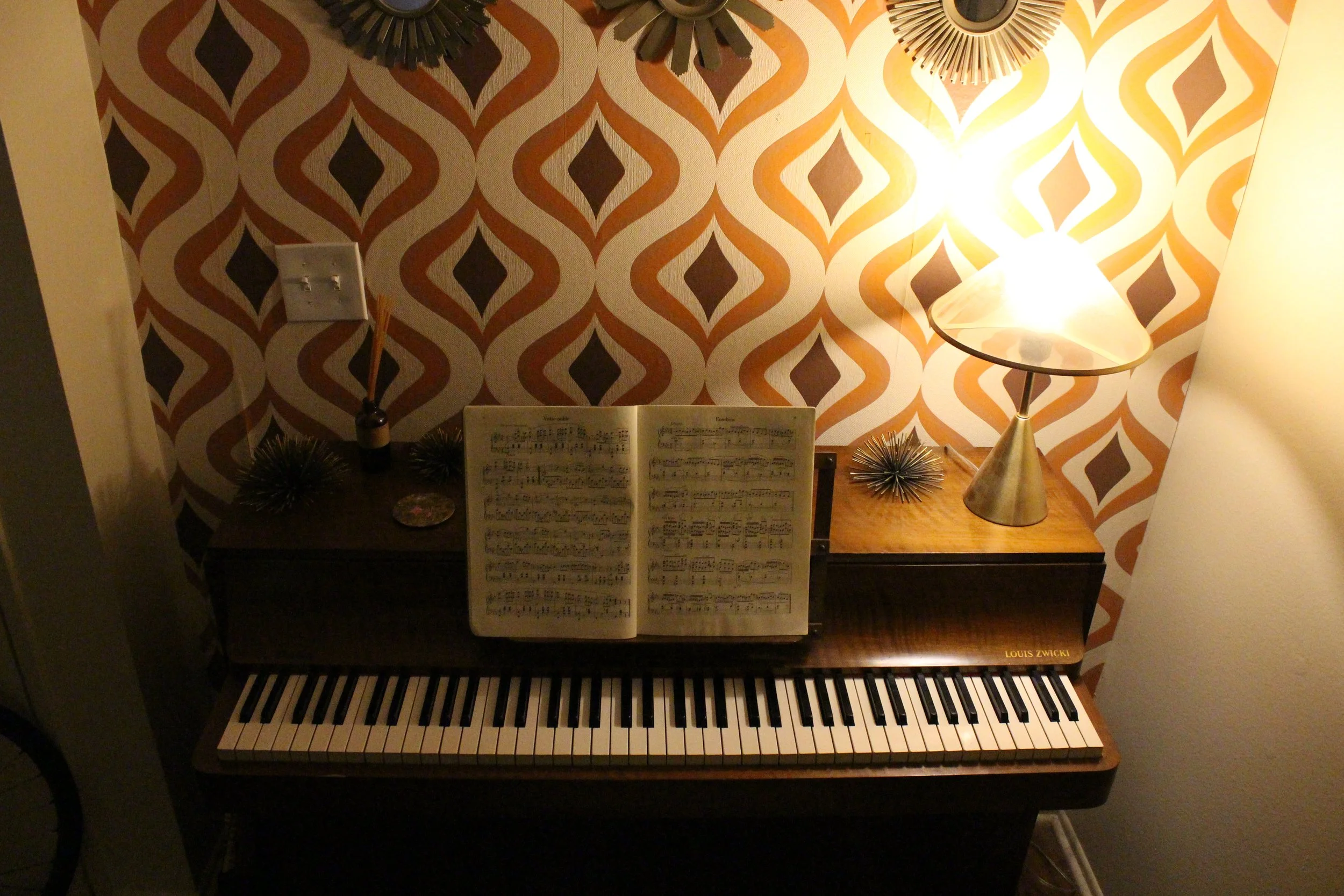
Danish Pianettes: Small Footprint, Big Sound
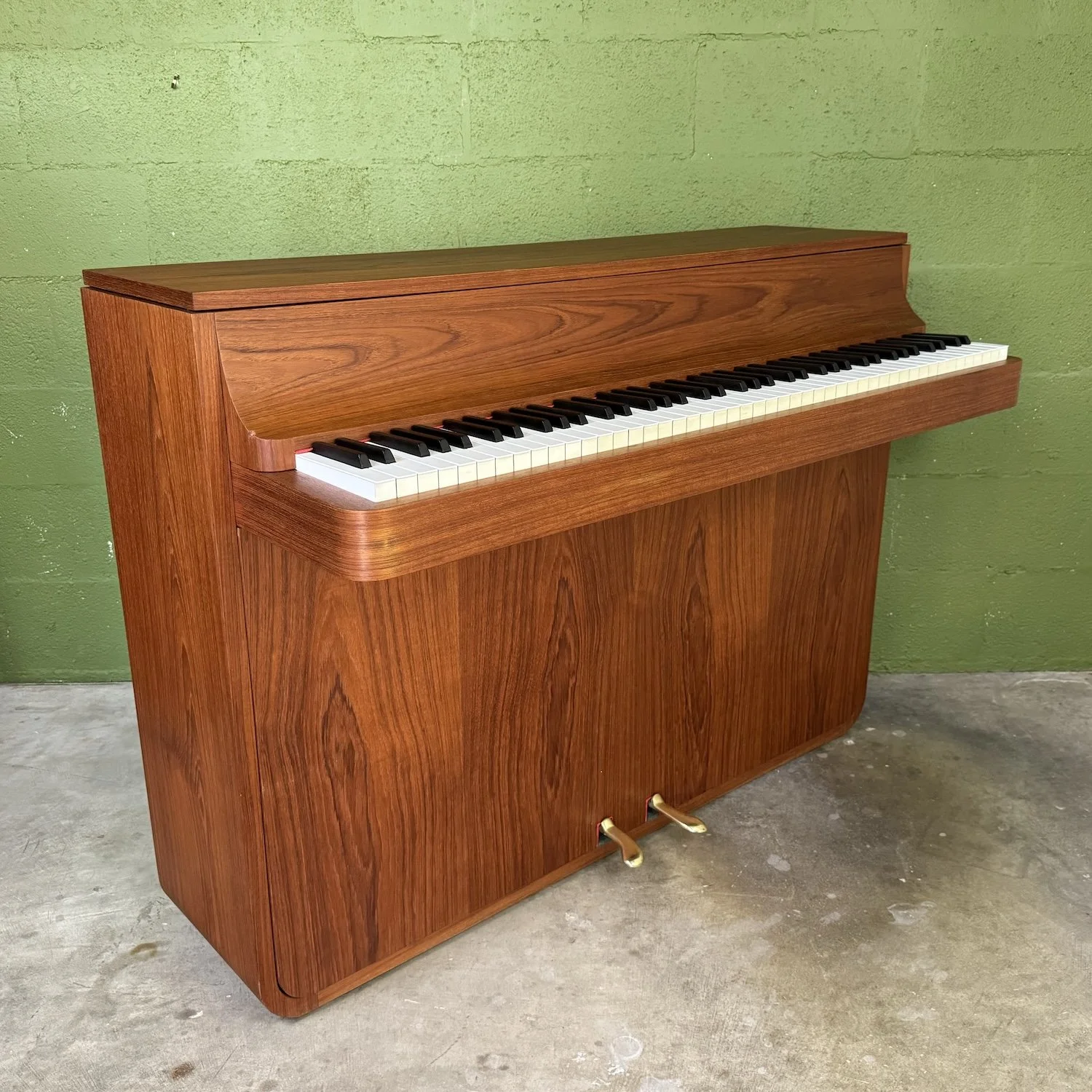
The Enduring Appeal of Louis Zwicki Pianos
In the mid-20th century, as modern architecture and interior design reshaped American homes, a new kind of piano began appearing in living rooms across Los Angeles: the Danish pianette. Compact, elegant, and surprisingly powerful, these instruments offered something different from the bulky American uprights that had dominated homes for decades.
Among the most recognizable of these was the Louis Zwicki pianette, a piano whose design philosophy feels just as relevant today as it did when it first arrived in Southern California.
At Furniture Fosters, these instruments have become one of our specialties, not only because of their design, but because of the fascinating story of how they arrived here.
A Danish Piano for the Modern Home
During the 1950s and 60s, Danish furniture and design were gaining enormous popularity in the United States. Clean lines, natural woods, and functional minimalism defined the era. Danish pianette makers followed the same philosophy.
The Louis Zwicki pianette embodied these ideals:
Minimal, modern cabinet designFine Scandinavian woods such as teak and rosewoodCompact dimensions (often around 35 inches tall)A fully finished back panel, sometimes with woven cane
This last feature was particularly unusual. Because the back of the piano was beautifully finished, the instrument could be placed anywhere in a room—not just against a wall. Advertisements of the time even suggested using the piano as a room divider, blending music with interior architecture.
The pianette was not just an instrument. It was a piece of modern furniture.
Penny Owsley and the Los Angeles Connection
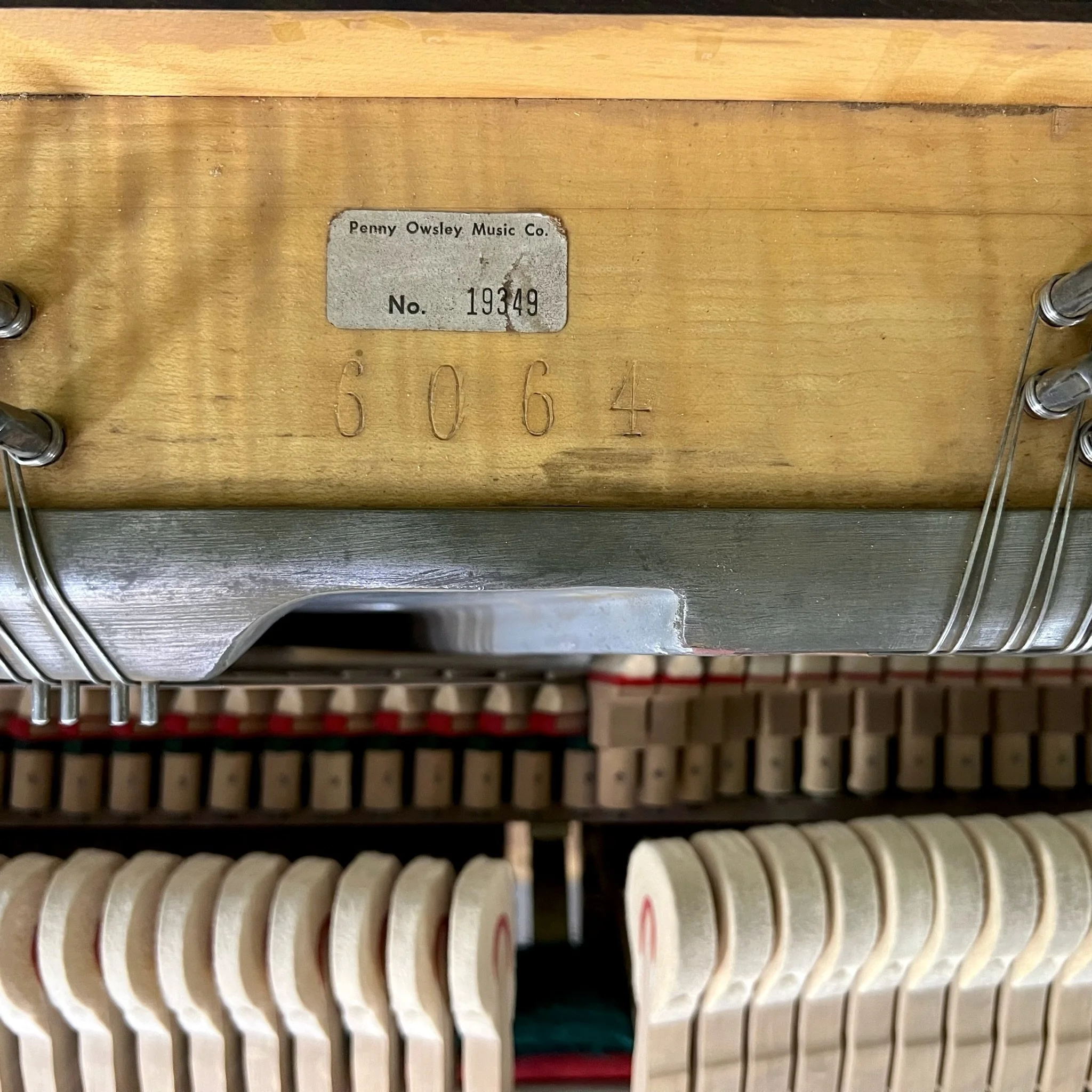
Many Louis Zwicki pianos that surface in Southern California carry a small stamp on the left side of the cabinet.
Penny Owsley was a piano and organ dealer who also specialized in bringing Danish pianos to the United States. Los Angeles, with its modernist architecture and enthusiasm for Scandinavian design, became a natural market for these instruments.
Period advertisements promoted the Zwicki pianette as: European craftsmanship, Danish contemporary design, Compact size with “big tone”
One ad from the era listed starting prices at $1,045.
Adjusted for inflation, that places these instruments roughly in the $10,000–$11,000 range in today’s dollars, a reminder that these were not inexpensive novelty pianos. They were premium imports aimed at buyers who valued both design and musical performance.
The Engineering Behind the Sound
At first glance, a 35-inch piano might seem too small to produce a satisfying tone. Danish pianette builders addressed this problem through clever engineering.
One of the key innovations was maximizing string length inside a compact cabinet.
Traditional upright pianos rely on height to accommodate longer bass strings. Danish pianettes instead used several design strategies to extend string length within a smaller frame:
Very low hitch pin placementSteep string angles across the bridgeHorizontal pin blockFull-height vertical string layouts
These choices allowed designers to squeeze the longest possible speaking length out of a small cabinet.
The result is something that surprises many players:
a piano with a compact footprint but a rich, resonant tone.
The bass often has a rounded, warm character that feels much larger than the instrument’s size would suggest.
A Piano Designed for Real Living Spaces
In cities like Los Angeles, space has always been a consideration. The Danish pianette was, in many ways, ahead of its time.
These pianos fit naturally into modern homes because they combine three qualities that rarely appear together:
Small footprintElegant furniture-grade designA full acoustic piano action and satisfying sound
Rather than dominating a room, a Louis Zwicki pianette integrates into it.
This is one of the reasons they remain so appealing today. The same qualities that made them attractive to mid-century homeowners—beauty, practicality, and thoughtful design—continue to resonate with modern players and collectors.
Why They Still Matter Today
At Furniture Fosters, we often see the same reaction when someone encounters a Danish pianette for the first time.
People expect a novelty instrument because of the size.
Then they hear it.
The experience reflects exactly what Penny Owsley’s advertisements promised decades ago: a compact piano with real musical presence.
Combined with the warmth of teak or rosewood cabinetry and the unmistakable lines of Scandinavian design, the Louis Zwicki pianette occupies a rare intersection between musical instrument and design object.
More than half a century after they first arrived in Los Angeles, these pianos still deliver on the same promise:
Beautiful design.
Efficient use of space.
And a sound that exceeds expectations.